
"I Find That Offensive" - Review
25 Oct 2019
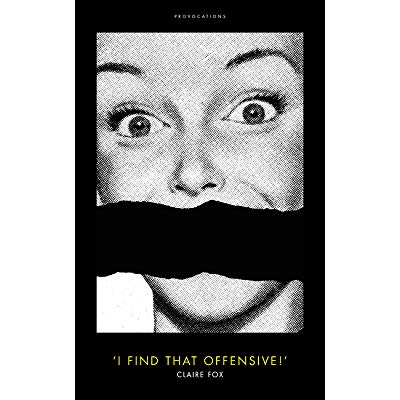
“When you hear that now ubiquitous phrase “I find that offensive,” you know you’re being told to shut up”
These are strange days indeed. I never expected to find myself in such strong agreement with people like Germaine Greer and Peter Tatchell. However, these last few years have seen the rise of “no platforming” public speakers. “Safe spaces” are being established in universities (of all places). Hysterical tweet storms regularly force public figures expressing perfectly legitimate opinions to repent in sackcloth and ashes.
Recently I read a very helpful book which reflects on this new world. It was written by Claire Fox, an MEP, the director of the think tank “The Institute of Ideas” and regularly heard on BBC Radio 4’s The Moral Maze.
“I Find That Offensive” is a very readable examination of the threat to free speech in our culture. It begins with the author writing about her visits to speak to two sets of sixth form students. In each occasion, there were students who didn’t simply disagree with what she said, but were upset she had even expressed a particular opinion. As she writes in the prologue - “What these two schools had in common were teenagers who believed that words really hurt and that contradictory opinions to their own beliefs were the cause of real harm”. The phrase “I find that offensive” is meant to shut down all discussion.
The rest of her book is divided into three sections. The first examines whether what she observed first hand in those classrooms is being really played out across the west. There are a number of examples of individuals being silenced or shamed or even hounded from their jobs for sharing opinions that are seen as unacceptable. As the examples build up (referenced - this is not just a collection of tabloid exaggerations) it is difficult to avoid the conclusion that there is a growing chilling effect of this culture on our public speech. The incidents don’t just centre on individuals though. Perhaps the scariest examples are where organisations - particularly universities - are banning societies on campus, or texts from the classroom. In a culture like this what matters are the words of the offended - leading to a race to become the most “victimised” and therefore most listened to.
However this book is not just a complaint that “things have got out of hand”, and a rant against “generation snowflake”. In the second part the author takes a step back and asks “where has this culture come from?” Interestingly, she blames her own generation for raising the current generation to be like this. As she writes :
“We socialised them to be that way. They have been reared on stories about how vulnerable and in need of protection they are. Adult society has fed them a diet of anxieties and provided the language of safety and risk aversion that now threatens liberal values of tolerance and resilience. We are reaping what we have sown - and the young Snowflake Generation, so quick to shout offence, are merely ventriloquising our own fears imposed on them as children”.
She then goes on to expand on this, citing examples such as the health and safety culture of the 1990’s onwards, the catastrophising of the news media, and the obsession with child protection, all to show that children grow up today seeing the world as a terrifying place. This is combined with a child-centred educational philosophy and obsession with self esteem which seems to pander to and not challenge, the narcissism in every child and adolescent.
In the final section the book takes a different turn. The author addresses young people directly. Firstly, to those who are part of “Generation Snowflake” she writes unpatronisingly, but challenges them to think through what they are doing , saying, and how they are responding.
Fox finally writes a letter to young people who are also concerned about the way society is going, and want to defend free speech from their “Generation Snowflake” peers. I found her advice fascinating, and some of it it resonated with me as I thought about the temptations and struggles that we as evangelical Christians have in our culture proclaiming the gospel.
“Don’t just be an un-PC rebel lashing out.” This is the temptation for all those fed up of being told what to say or not say. She has in mind the rise in crude laddishness on campuses. However, we need to admit that our Christian culture has some of this. Whether it’s the street preacher deliberately focusing on some sinful activities rather than others just because he knows it will get a reaction, or a blog/facebook/tweet message, or even sermon, there is no place for just lashing out. Pastors in particular have a responsibility for understanding how particular words are heard by particular people in a culture. This is not a call for bland speaking or preaching - far from it - rather a challenge to avoid sinful speech that has it’s motivation in anger or getting our own back.
“It is more than a joking matter”. Claire Fox argues that satire and mocking ridicule simply does not take seriously enough what is at stake when free speech is under threat. We should add that we know this is true - the devil wants to silence truth, so we need to take these threats very seriously.
“Don’t play them at their own game”. This is probably her most important point. It is very tempting to enter what Fox calls “the competitive victimhood race”. But doing that gives ground to the argument that truth is not important. It would be good for Christians, and particularly those running Christian pressure groups to give this thought. The moment we demand to be heard simply because we are “oppressed” in the moment we will stop proclaiming the message because it is true.
Finally, she ends with what she describes as “A new model of personhood, a new philosophy of freedom”. In this, she says that they don’t just need to say to their classmates “develop a backbone”, but show and be “the best version of human beings we can imagine”. For Fox, this means cultivating a philosophical outlook that emphasises human potential, and looks to peoples strengths rather than their weaknesses, and proclaiming a new kind of freedom, not with safety as the end goal but with something greater.
At this point, we must be cheering - while disagreeing with her conception of conception of personhood and freedom. Surely the Christian must be preaching, and then living out “the best kind of human being we can imagine” - in union with Christ. Proclaiming the good news of perfect freedom - freedom to worship the triune God through Christ, and the freedom we have from the enemies of sin, Satan and death. Rather than being terrified or angry at the present culture, this is the great opportunity we have.